Cassette Tapes: The Mixtape Era That Changed Music Forever
Before Spotify playlists, there were cassette tapes — and the art of making the perfect mixtape was a cultural institution all its own.
Long before you could hand someone a Spotify link, making someone a mixtape was one of the most intimate acts a person could perform. It took time — real time. You sat by the stereo, finger hovering over the record button, waiting for the right song to start on the radio. You planned the running order. You wrote out the track listing in your best handwriting on that tiny slip of paper. You chose a name for Side A and Side B.
It said something about you. More than that, it said something about how you felt about the person receiving it.
The Anatomy of a Cassette Tape
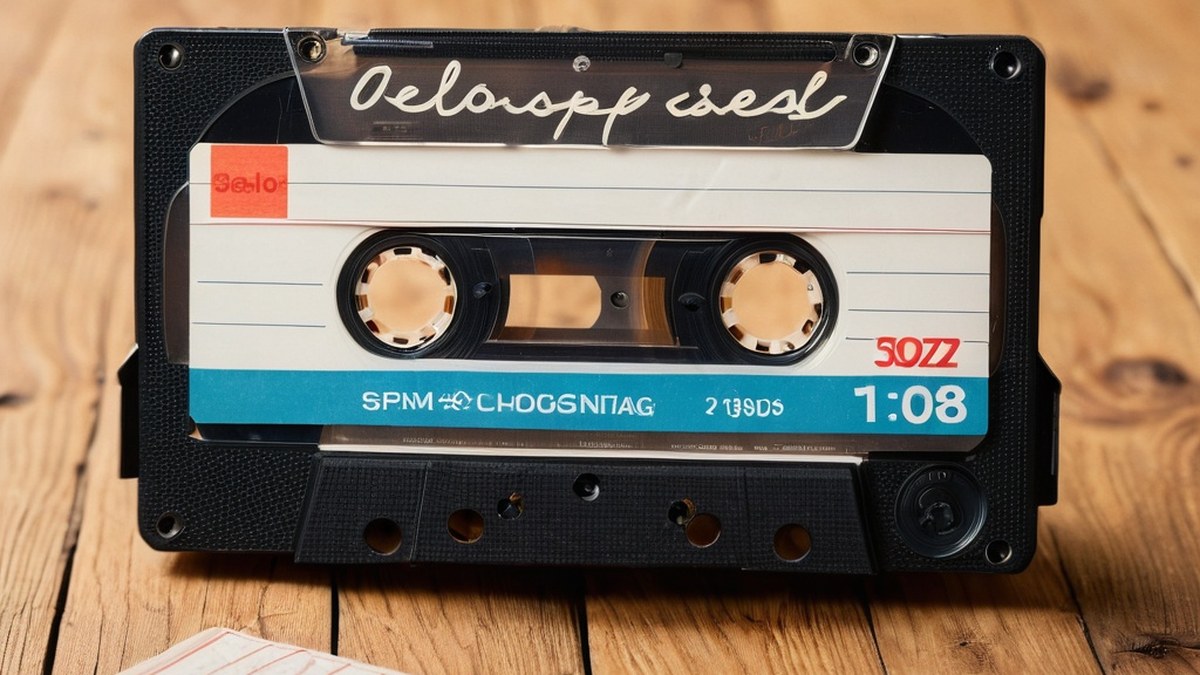
The cassette tape was first introduced by Philips in 1963, but it didn’t hit its cultural stride until the late 1970s and 1980s. A standard C-90 cassette gave you 45 minutes per side — enough for a proper album or a carefully constructed mixtape. The tape itself was housed in a small plastic shell, roughly the size of a deck of cards.
The two most common tape types were:
- Type I (Ferric) — the standard, affordable tape, fine for most uses
- Type II (Chrome) — higher quality, better for music, required a compatible player to unlock its full potential
Audiophiles obsessed over tape brands. TDK, Maxell, Sony — these weren’t just manufacturers, they were statements. A Maxell XLII-S was the kind of tape you reached for when something really mattered.
The Art of the Mixtape
The mixtape was more than a playlist. It was a narrative. A good mixtape had an arc — it opened with energy, maybe dipped into something slower in the middle, and ended in a way that felt deliberate rather than accidental.
There were rules, even if nobody wrote them down:
- Never start with a ballad. You needed to hook the listener immediately.
- The last track on Side A matters as much as the first. It’s what people remember when they flip the tape.
- Leave no more than a second or two between tracks. Dead air was amateur.
- Know your running time. Nothing worse than a song getting cut off because you misjudged how much tape was left.
The effort involved was part of the point. A mixtape couldn’t be made in thirty seconds. It was a gift of time as much as music.
Rewinding: The Tax You Paid
Every cassette user knows the ritual. You get to the end of Side B, and you need to go back to the start. If you had a player with auto-reverse, you were living in luxury. If not, you rewound — and rewinding was not fast.
The pencil trick was universal knowledge: slot a pencil through one of the tape’s spools and spin it manually. It was faster than letting the player do it, and it was oddly satisfying. A whole generation of people can do this automatically, without thinking, because their hands just remember.
Video rental stores famously put “Be Kind, Rewind” stickers on their VHS tapes — but cassette users already understood the social contract.
Dolby Noise Reduction
High-end cassette decks offered Dolby noise reduction — a system designed to reduce the characteristic hiss that magnetic tape produced. Dolby B was standard; Dolby C offered better performance at the cost of compatibility. The irony was that if you recorded with Dolby on and played back with it off (or vice versa), the sound would be noticeably off — tinny or muddy depending on the direction.
Getting this right was a small but genuine technical skill. In an era before everything was automatic and perfect, knowing your equipment mattered.
The Walkman Changes Everything
Sony’s Walkman, released in 1979, fundamentally changed how people listened to music. For the first time, music was personal. Private. You could be on a bus, walking to school, sitting in a park — and be entirely inside your own soundtrack.
The Walkman made the cassette the dominant format of the 1980s. It’s not an exaggeration to say that the Walkman changed what music meant to people — it turned it from something you listened to at home to something you carried with you as part of your identity.
The Death and the Afterlife
CDs started eating into cassette’s market share in the late 1980s. By the mid-1990s, the writing was on the wall. The last major-label album to be released simultaneously on cassette was sometime around 2003. By the mid-2000s, new cars were being made without cassette players.
And yet. The cassette never fully died. A cult of enthusiasts kept buying and making tapes. Independent musicians found cassettes to be a cheap and tactile way to release music. By the 2010s, there was a genuine cassette revival — small but real, driven by the same impulse that keeps vinyl alive.
There’s something the cassette does that digital can’t replicate: it degrades gracefully. A tape played a hundred times sounds different from a fresh one. It accumulates warmth and grain. It becomes, in a small way, yours.
The playlist you made your friend in 1994 still exists somewhere on a cassette in a shoebox. The Spotify playlist you shared last week will disappear the moment either of you cancels your subscription.
That’s not nothing.