Chuck E. Cheese: Where a Kid's Birthday Party Became an Event
Animatronic animals, a ball pit, a pile of tickets that never quite added up to the prize you wanted — for a huge stretch of kids, this was simply what a birthday party was.
For a specific stretch of childhood, there were two kinds of birthday parties: the kind at your house with a cake and some games in the backyard, and the kind at Chuck E. Cheese, which felt — even as a seven-year-old with limited life experience to compare it against — like an entirely different tier of celebration. A whole restaurant, apparently built around the specific premise of entertaining children, with its own mascot, its own stage show, and a token-operated economy that turned a children’s birthday into something closer to a theme park visit.
A Pizza Restaurant That Happened to Have Robots
Chuck E. Cheese started in 1977 as the creation of Nolan Bushnell, the same person behind Atari, built explicitly around the idea that kids would eat pizza more enthusiastically if there were arcade games and animatronic entertainment attached to the experience. The animatronic stage show — a band of mechanical animals, led by Chuck E. Cheese himself, performing stilted but weirdly captivating musical numbers on a rotating schedule — was the restaurant’s signature feature for decades, equal parts charming and, if you looked at it too closely under the wrong lighting, the stuff of genuine childhood nightmares.
The Token Economy
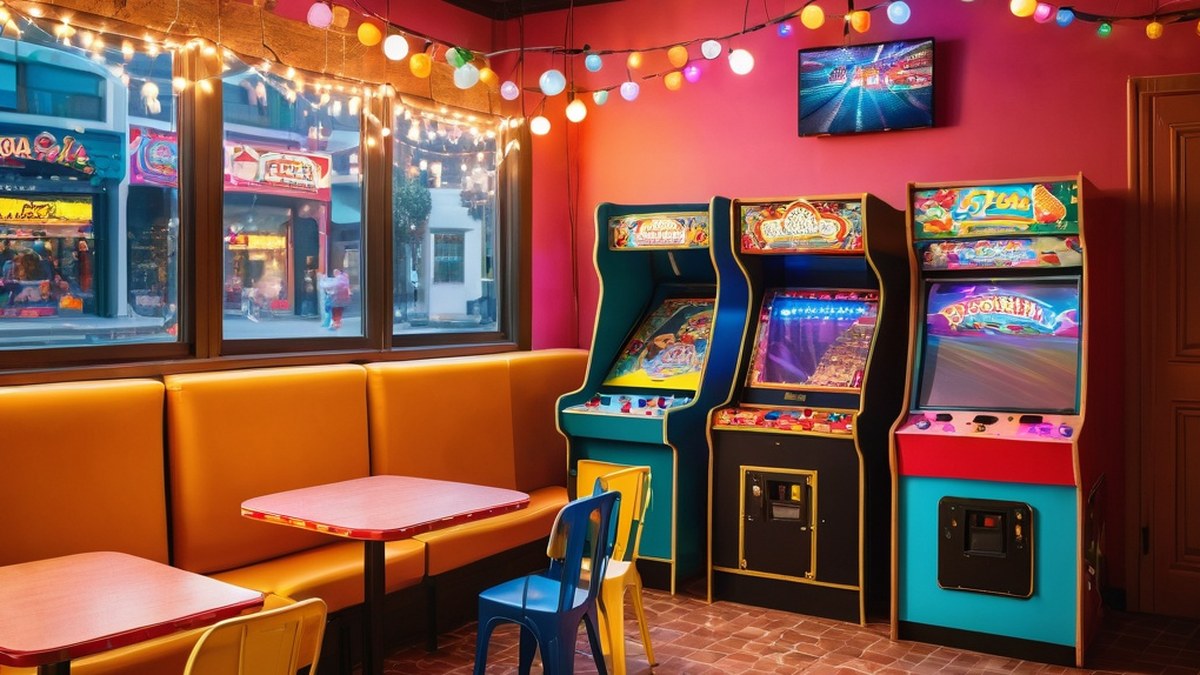
Admission to the restaurant itself was free; what cost money was the stack of tokens every kid clutched like currency, fed one at a time into skee-ball lanes, basketball hoops, and whatever the current arcade cabinets happened to be. Birthday party packages typically came with a set allotment of tokens per guest, which created its own quiet social dynamic — kids with a more generous token allowance from a party package lording it over friends who’d run out early and had to watch from the sidelines, or pool resources with a sibling to keep playing.
Tickets That Never Added Up
Winning games spat out paper tickets, torn off a perforated roll, which accumulated throughout the party into a surprisingly substantial pile that felt, in the moment, like real wealth. The actual exchange rate at the prize counter told a different story: hundreds of tickets, carefully saved and counted, usually translated into a plastic spider ring, a tiny eraser shaped like a fruit, or if you’d truly had a stellar day at skee-ball, something slightly more substantial like a small stuffed animal. The gap between ticket-pile excitement and prize-counter reality was a formative, if mild, early lesson in managing expectations.
The Animatronics Everyone Remembers Differently
Ask different people who grew up visiting Chuck E. Cheese about the animatronic show and you’ll get genuinely different reactions — pure nostalgic fondness from some, a specific residual unease from others who found the jerky mechanical movements and slightly-off facial animation unsettling even at the time. The chain itself eventually recognized this divide and began phasing out the animatronic stage shows at most locations in favor of simpler entertainment and more arcade floor space, a decision that quietly ended an era for anyone who specifically remembers the show as the whole point of the visit.
A Birthday Party as a Packaged Experience
What Chuck E. Cheese really sold, underneath the pizza and the robots and the tokens, was something parents genuinely valued: a birthday party that required almost no setup, cleanup, or entertainment-planning on their part. Book a room, show up, and the whole experience — food, games, a cake moment, a dedicated party host — was handled. For the kids, it was simply the best possible place a birthday could happen. For the parents organizing it, it was arguably an even better deal, and that combination is exactly why so many childhoods have at least one framed photo of a birthday spent under Chuck E. Cheese’s slightly unsettling animatronic gaze.