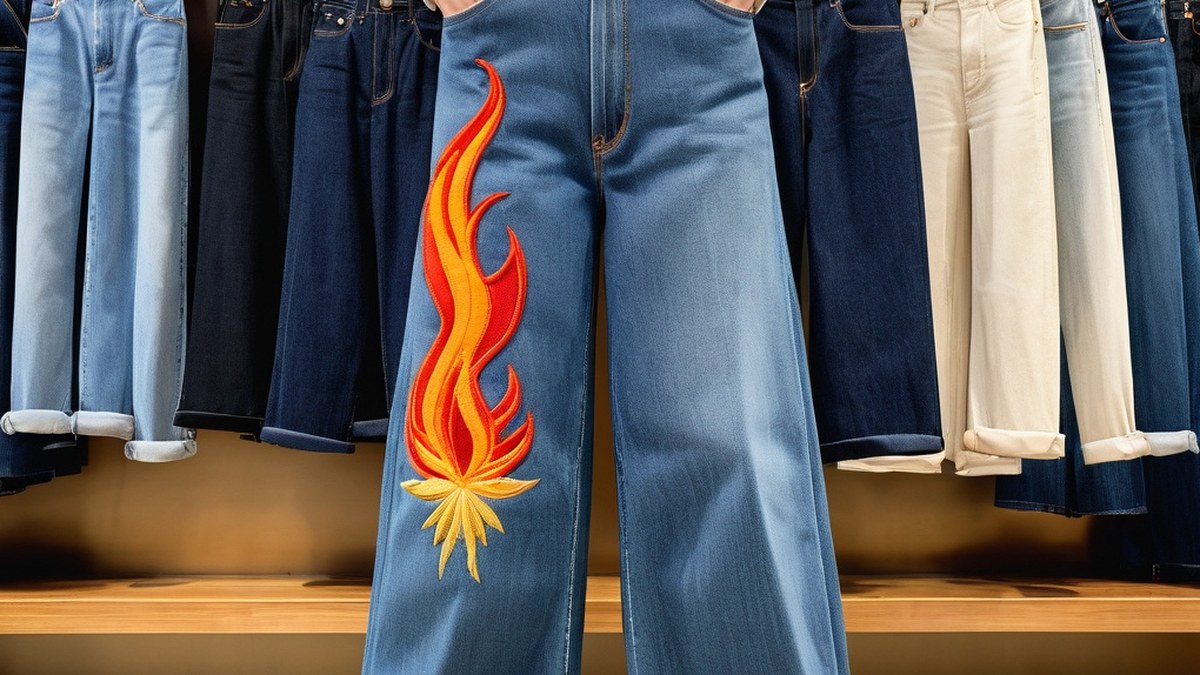
JNCO Jeans and the Decade When Pants Got Impossibly Wide
At their peak, a single pair of leg openings could be wide enough to fit a basketball through sideways — and an entire generation of mall-goers decided that was exactly the look they wanted.
There was a brief, genuinely strange window in the mid-to-late 1990s when the defining fashion flex among a certain subset of teenagers wasn’t a logo, a brand name stitched somewhere visible, or an expensive sneaker — it was raw leg-opening width. JNCO Jeans, an acronym for “Judge None Choose One,” built an entire identity around pants so deliberately, extravagantly baggy that some models had leg openings measuring upward of twenty, thirty, even close to fifty inches around, wide enough that the wearer’s actual legs occupied a comparatively small fraction of the fabric swinging around them.
Born Out of Skate and Hip-Hop Culture
JNCO emerged from Southern California’s skateboarding and hip-hop scenes, where baggy clothing already carried real functional and cultural meaning — looser fits allowed for a fuller range of motion on a skateboard, and oversized silhouettes had become a defining visual element of 90s hip-hop fashion more broadly. JNCO took that existing baggy aesthetic and pushed it to what felt, at the time, like its logical extreme, embroidering increasingly elaborate designs — flames, dragons, cartoon characters, tribal patterns — across pockets and leg panels that offered an enormous amount of literal fabric real estate to decorate.
The Practical Problems Nobody Mentioned in the Ads
Wearing genuinely enormous pant legs came with real, rarely-advertised downsides that anyone who owned a pair eventually discovered firsthand: hems dragging and fraying against the ground constantly, a real risk of a leg opening catching on a bike pedal or a skateboard, and an almost comedic amount of fabric bunching up if you tried to run. None of this meaningfully dented demand. If anything, the impracticality became part of the appeal — there was a specific kind of confidence in wearing pants that were, by any reasonable functional standard, a genuinely bad design choice, and not caring.
A Mall Status Symbol
JNCOs weren’t cheap, and that mattered — a pair could run well over sixty dollars at a time when that represented a serious allowance-and-saved-birthday-money purchase for most teenagers. Showing up to school in a pair, particularly one of the more extreme “Mega Wide” or similarly named styles, carried genuine social weight in certain circles, the same way a specific sneaker brand or a particular jacket might in a different peer group. Mall stores that carried them became regular browsing destinations even for kids who couldn’t yet afford a pair, trying on increasingly absurd leg widths just to see how they looked.
The Backlash Was Immediate From Some Corners
Not everyone was on board, and the backlash started almost as fast as the trend itself. Parents found them impractical and frequently ridiculous-looking; plenty of schools found ways to informally discourage the most extreme widths without technically banning jeans outright; and even within teenage social circles, JNCOs were as often mocked by kids who preferred a different aesthetic as they were celebrated by the kids actually wearing them. Few fashion trends have generated quite such a sharp, immediate split between “this is the coolest thing I’ve ever seen” and “this looks completely ridiculous” within the same age group.
A Trend That Couldn’t Outlast Its Own Extremity
By the early 2000s, fashion had swung hard in the opposite direction, toward slimmer, more fitted silhouettes, and JNCO’s defining feature — leg width as an escalating arms race — had nowhere left to go once the cultural mood moved on. The brand persisted in a smaller, more niche form for years afterward, but the specific mainstream moment when genuinely enormous pant legs were a mall-wide status symbol closed about as fast as it had opened. For anyone who owned a pair, the memory tends to come with a specific mix of fondness and mild disbelief — a reminder of just how wide, both literally and culturally, that particular fashion window briefly got.