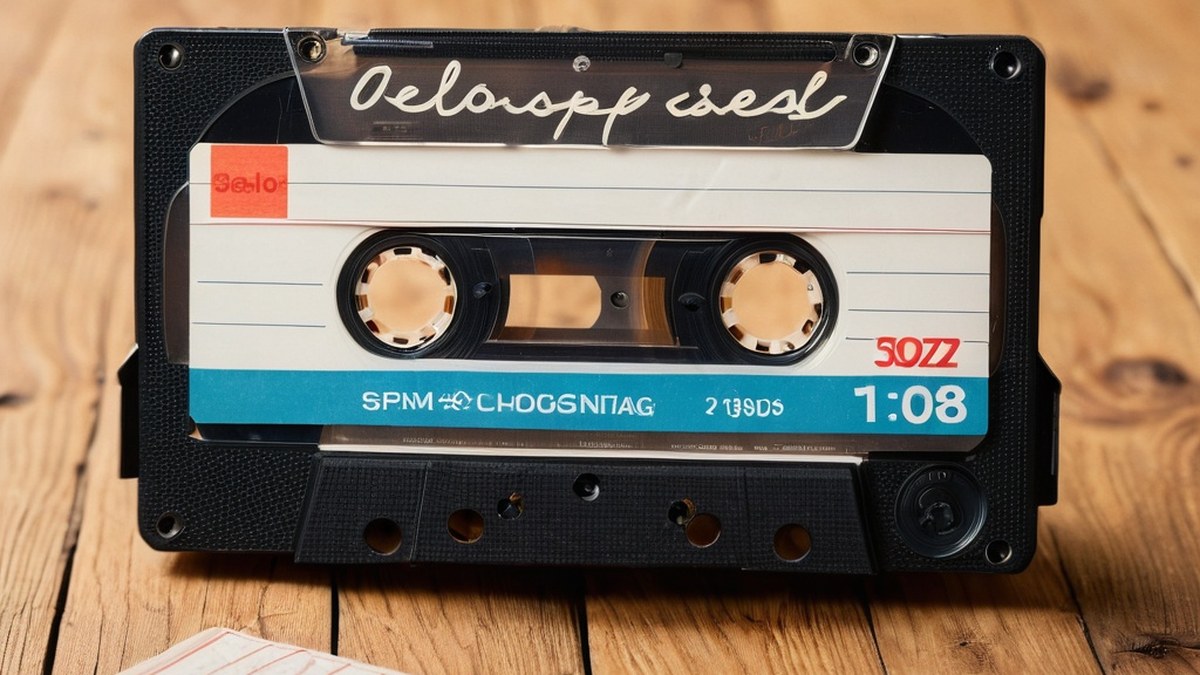
The Art of the Mixtape: Why It Took Three Hours and Meant Everything
A Spotify playlist takes thirty seconds to make. A mixtape took an entire Saturday afternoon — and that was the whole point.
You started with the first song and built backwards from there. Not always — sometimes you stumbled on the opening track by accident, halfway through a pile of records, and suddenly everything else organised itself around it. But usually you started with the first song, because the first song was a promise about what kind of mixtape this was going to be. Too slow and it felt funereal. Too fast and it felt frantic. The opening track told the recipient: this is who I am right now, at this moment, and this is what I think about you.
Nobody taught you these rules. You absorbed them from receiving tapes, from making tapes, from the accumulated understanding of a culture that had arrived at a form and taken it seriously.
The Architecture of a Side
A standard C-90 cassette gave you 45 minutes per side, though the actual usable space varied slightly by manufacturer — a TDK SA-90 might run fractionally longer than its nominal length, and you learned which brands gave you a little extra room and which cut you short. Forty-five minutes was enough for about ten songs, sometimes eleven if you picked shorter ones, sometimes eight if you were building around longer tracks.
Side A and Side B had different psychological weights. Side A was the statement: the songs you were most confident about, the selections that said the most. Side B was more expansive, more experimental, the place you could take risks. People listened to Side A more than Side B — not always consciously, but the physics of the cassette meant that getting to Side B required effort, the small act of flipping the tape, which created enough friction that a casual listening session might never get there. A good mixtape maker planned for this. If you had something you really needed someone to hear, you put it on Side A.
The closing track of Side A was almost as important as the opening. That was the last thing the recipient heard before they flipped the tape. Some makers went for a cliffhanger — something that felt unresolved, that made the flip feel urgent. Others went for a rest, a softer track that let the side breathe before the break. Either approach communicated something about how you thought about the person receiving it, about the kind of experience you were trying to create.
Recording from the Radio
There was a version of the mixtape that was less crafted and more hunted. Radio recording meant sitting by the stereo with a tape cued up, finger on the record button, waiting for a song you wanted. John Peel’s show, for British teenagers from the late 1960s through the 2000s, was an inexhaustible source — he played everything, at unpredictable hours, and the act of recording from Peel meant building a tape that was partly your curation and partly his, a collaboration across the radio signal.
The skill involved was real. You had to anticipate when the DJ would stop talking and the song would start — press record too early and you’d capture the end of their sentence, too late and you’d lose the first beat of the track. The DJ announcing the song title before playing it was a gift; the DJ who let the song simply begin without preamble required faster reflexes and more attention. A generation of people developed the fine motor skill of the pre-emptive press, the half-second anticipation of the moment.
Radio recordings had an authenticity to them that pure album recordings didn’t quite have. The slight fade-in as the recording started, the occasional DJ over-talk at the end, the ambient quality of a sound that had passed through the air and into your tape — these were imperfections, but they were imperfections that meant you’d been there, listening, at the right moment. There was no other way to get that track. You couldn’t download it. You couldn’t find it on an album. You had captured something live, and the tape held the evidence.
The Handwritten Tracklist
The insert card was the part most people underestimated until they started taking it seriously. A standard C-90 cassette shell came with a thin card insert, roughly 10cm by 7cm, folded in half — barely enough space for a song title list and maybe a header. Getting the writing small enough to fit all the information without it looking cramped required a specific kind of handwriting control. Too small and it was illegible. Too large and you’d run out of space and have to cram the last two tracks in the margins.
What you chose to include beyond the basic tracklist said something. Some people just listed the tracks. Others added artist names, which helped the recipient identify the things they didn’t recognise. Others added the album each track came from, which made the insert read almost like a bibliography of influences. A few went further: small illustrations in the margins, a quote that set the theme, a sentence on the back explaining what the tape was for. These additional elements were optional, effortful, and deeply meaningful. They indicated that you had thought about this beyond the minimum requirement.
The handwriting itself communicated tone. Neat, careful printing felt formal, deliberate. Rushed handwriting felt spontaneous, casual. Some people practised the insert as a document — draft first on rough paper, then transcribe carefully. Others wrote it directly, one shot. The result was always a physical artefact that looked like a particular moment in that person’s life — their handwriting at that age, their sense of what was worth including, evidence of how much time they chose to spend.
The Romantic Mixtape
The mixtape for a romantic purpose operated by a separate and more exacting standard. Every track selection was a potential message, interpreted or misinterpreted by the recipient with whatever context they had. A love song that was too on the nose felt aggressive, desperate. A love song buried cleverly in a sequence of other tracks felt like something hidden for the other person to find. The art was calibration.
There was a specific terror in making a romantic mixtape. The tape would be listened to in private, possibly many times, and everything on it would be analysed. Track three, track six — what did those mean? Was the closer ironic? Was the tempo of Side B building toward something? The recipient brought interpretive energy you couldn’t fully predict. What felt, to you, like a thoughtful but not-too-intense selection of songs that expressed your feelings indirectly might read, to them, as a declaration of something enormous. This was both the risk and the point.
Receiving a mixtape from someone you had feelings for was a physical experience. The object in your hands — cassette shell, insert card, maybe a small note tucked inside the case — was evidence of hours of thought about you, specifically. Someone had sat in their room, listening to their records, thinking: this one. This one says something I want them to hear. This one goes here in the sequence. They had written your name on the label. None of this could be accelerated.
Why the Digital Playlist Isn’t This
The playlist does most of what the mixtape did, technically. You select songs. You order them. You share them. A Spotify playlist can hold hundreds of tracks, include cover art, travel instantly to anywhere in the world. It is objectively more capable as a vehicle for sharing music.
What it cannot replicate is the cost. Making a playlist costs nothing — no money, no time, no physical materials. You can make one in five minutes while doing something else. You can add or remove songs after the fact. You can have second thoughts and fix them. The recipient knows all of this, whether they think about it explicitly or not. A playlist says: I spent a few minutes on this. A mixtape said: I spent Saturday afternoon on this. I sat by a stereo for three hours, timing recordings, redoing the sequence when I ran the tape out and had to start over. I wrote your name in my handwriting on this small piece of paper.
The time was the message. The constraint was the point. The limitations of the cassette — the fixed length, the inability to edit after recording, the physical insert that could only be written once — were not frustrations to be engineered away. They were the mechanism by which the object became meaningful. You couldn’t make a mixtape carelessly and have it still be a mixtape. The care was baked into the form.
That’s what we’re actually mourning when we get nostalgic about the mixtape — not the medium, but the moment in culture when the effort required to share music with someone was proportionate to what music meant. When it cost you something, and the cost was the whole point.