Pay Phones: The Public Phone Box and the 10p That Got You Home
Before everyone carried a phone in their pocket, pay phones were infrastructure — as ordinary and essential as street lights. Then they weren't, and then they were gone.
The phone box was never beautiful, exactly. In Britain, the classic red K6 box designed by Giles Gilbert Scott in 1935 came close — that distinctive scarlet livery, the crown at the top, the glass panels that let you watch someone make a call from across the street with the particular voyeuristic interest that transparent booths invite. But even the K6 had a smell that complicated the aesthetic: the accumulated olfactory residue of decades of use, damp coats, cigarettes, the plastic of the handset warm from whoever had used it before you, a vague chemical note underneath everything else that was the phone itself. You pressed the handset to your ear and you were, briefly, connected to the entire human history of that box.
The American booth was an open affair by comparison — the classic Bell System phone booth of the mid-twentieth century, a three-sided kiosk with a folding door that gave the illusion of privacy while actually providing very little. Clark Kent changed into Superman in one, the logic being that the booth was an accepted zone of brief enclosure in the middle of public space, a place where you could stand with some expectation that the people around you would grant you a temporary bubble. That bubble was the pay phone’s social contract: you had a few minutes of semi-private communication, mediated by the coin slot, and then the world resumed.
The Coins That Ran the System
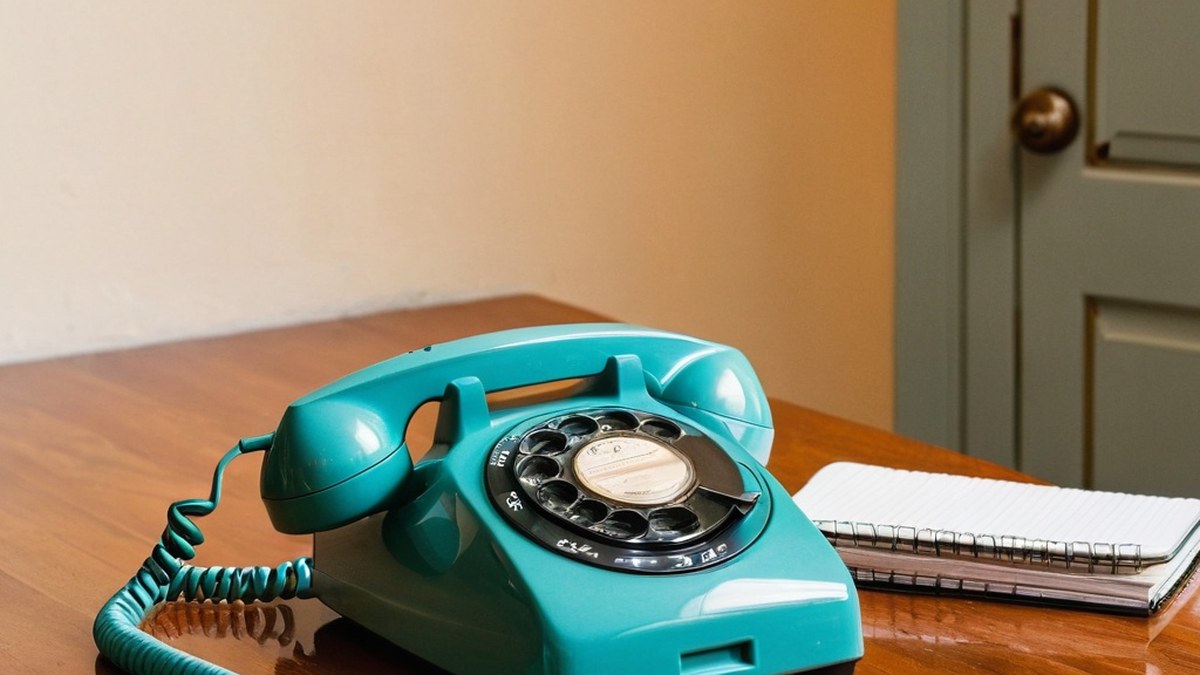
The mechanics were tactile in a way that’s easy to forget. In Britain through most of the 1980s, a local call cost 2p, then 5p, then 10p as the years passed and BT revised its tariffs. You learned to carry the right coins the way you learned to carry a bus pass — as a basic infrastructure of daily life. The coin went in, you heard the tone change, you dialled. On newer boxes by the late 1980s, the system was push-button. On older ones, you still turned a dial, dragging your finger around a heavy wheel and releasing it, listening to the clicks as it returned to rest.
The British Telecom boxes of the 1990s — the redesigned glass-and-steel models that replaced many red K6 boxes in urban areas — introduced card payment, and the phonecard briefly became its own cultural object. Sold in denominations of 2, 5, 10, and 20 units at newsagents and post offices, with a magnetic strip on the back that depleted as you used it, the phonecard was the pre-paid mobile phone of its era. Children collected them. The artwork on the card changed regularly, and certain limited editions circulated among collectors. This seems improbable now. It was simply true.
In America, the pricing was similarly stratified by the decade. A local call was a dime in the 1950s and 1960s. By the 1980s it was a quarter, and long-distance required quarters in significant multiples, fed into the machine at intervals as a robotic operator voice announced how many minutes remained on your deposit. The race to feed more quarters before the line cut out was a specific minor panic of pre-mobile life, conducted in convenience stores and hotel lobbies and on street corners, your pockets turned inside out for change while the other person waited on the line.
The Social Life of the Public Phone
The pay phone’s role in social life before mobile phones is difficult to fully reconstruct because it was so thoroughly woven into the fabric of ordinary time. You didn’t arrange to call from a pay phone. You called from wherever you were when you needed to call. The geography of pay phones — where they were, how reliable they were, whether they’d been vandalised — was a kind of local knowledge that people carried without thinking about it. There’s a phone box outside the pub on the corner. There’s one on the high street but the coin return is broken. There’s one at the train station, always a queue at rush hour.
Teenagers used pay phones as a primary communication infrastructure in ways that now require some explanation. If you were going to a party and needed to update the plan, you called from wherever you were. If you were running late for something and needed to warn someone, you found a box. “I’ll call you when I get there” meant finding a working phone and having the right coins. The planning was accounted for. You built the likelihood of needing a phone into your preparation for an evening the way you built in bus fare — it was part of the logistics of being out in the world.
Reversing the charges — making a collect call, in American English — was the emergency option, the call you made when you had no coins and needed someone to come and get you or to hear something urgent. The operator connected you, announced that you had a collect call from your name, and the person on the other end accepted or declined the charges. Parents accepted. It meant something had gone wrong, or the night had gone on longer than planned, or you needed to come home and had spent your last 10p on the bus. Reversing the charges was the safety net under the whole system.
Being Genuinely Unreachable
The mobile phone changed what it meant to be out of contact, and the change was so complete that it’s now difficult to fully inhabit the pre-mobile understanding of reachability. Before roughly 1999 in the UK, and somewhat later in wider adoption, if someone was out of the house, they were unavailable. You could not reach them. You could try later, when they might be home, or you could leave a message on their answering machine and hope they’d call back when they returned. Their whereabouts while out were their own business, known only to themselves and whoever they were with.
This was not experienced as deprivation. It was simply the nature of the world. You made plans in advance and trusted that the person would show up, because there was no mechanism for last-minute renegotiation. You said you’d meet at the pub at eight o’clock, and at eight o’clock, or near enough, you both arrived, because neither of you had any way to let the other know otherwise. The precision required to coordinate in a world without mobile phones produced a certain reliability in human behaviour that the mobile phone has largely eliminated — why plan carefully when you can adjust in real time?
The experience of being genuinely unreachable — of being out in the world, untracked, unavailable — is now a thing that requires deliberate effort. You have to turn the phone off, or leave it at home, and even then the absence feels wilful rather than natural, a statement rather than a neutral condition. Before mobile phones, everyone was unreachable most of the time, and this was the ordinary texture of life. You had your hours in the world, and they were your own, and whoever wanted to reach you would find you when you were home.
The Last Boxes
BT removed more than 120,000 public payphones between 2002 and 2020, reducing the estate from around 150,000 to fewer than 21,000. The ones that remain are legally protected if they represent the only communications facility in a rural area, or if they meet a minimum usage threshold. In some villages, the red K6 box has been converted to a book exchange, a defibrillator housing, a micro-library — repurposed rather than demolished, kept because the object itself carries meaning even when its original function is gone.
In New York City, the public pay phone — once an absolute fixture of every major street corner, maintained by NYCGO and NYNEX and AT&T in various eras — was almost entirely removed by 2022, replaced in many locations by LinkNYC kiosks that offer free Wi-Fi and phone calls via app. The last traditional pay phone in Manhattan was removed in May 2022, an event that generated genuinely affectionate press coverage, which tells you something about the relationship people had developed with an object they no longer used.
What the pay phone meant, beyond its function, was that the infrastructure of communication was public. It was out there in the world, available to anyone with the right coins, maintained as part of the city’s physical plant. You did not need to own a device. The device was on the street corner, and it was yours to use. The mobile phone privatised communication in a way that increased convenience enormously and cost something less quantifiable — the sense that talking to the people you loved was a common good, available to all, built into the walls of the city.