Renting Video Games: The Friday Night Gamble at the Video Store
You had 48 hours, no instruction manual, and no idea if the game was any good. That was the deal. You took it every time.
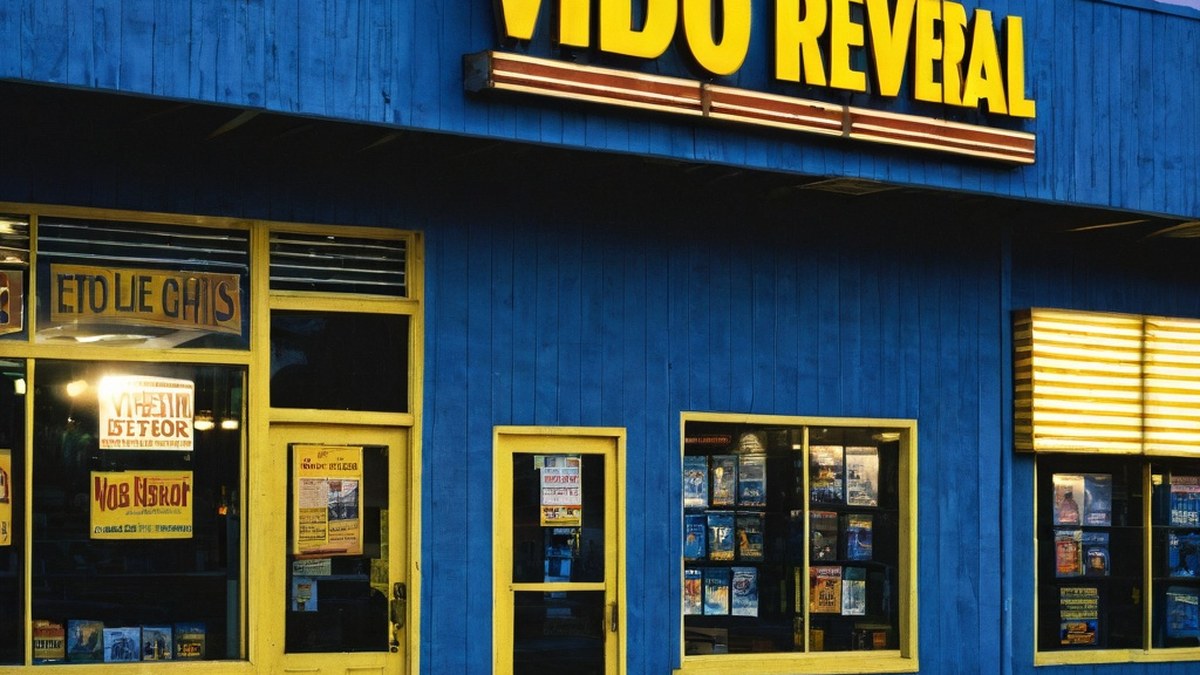
The box art was everything. You were standing in the video game section at the back of the video rental store — Blockbuster, or West Coast Video, or the independent place run by the man who always seemed faintly suspicious of children — and you had maybe $3.50 in your pocket and approximately twenty minutes before whoever had driven you there wanted to leave. The new releases were almost always gone. You were in the back catalogue, reading box art, trying to divine whether the game inside was good or terrible from thirty square inches of painted illustration and a three-sentence description on the back.
The artist who painted the cover of a mediocre NES game in 1989 probably never imagined they were creating a Rorschach test that would shape the weekend of thousands of children. But that’s what they were doing.
The Stakes of the Unknown
Renting video games was a fundamentally different relationship with entertainment than buying it, and it was different in a specific way: the stakes were calibrated perfectly. A new NES cartridge in 1990 cost somewhere between $40 and $60, which was real money that required either saving or petitioning a parent over a period of weeks. A rental cost $2 to $4 and lasted one or two nights. The lower financial commitment meant you could take chances on things you’d never risk full price on — the weird licensed game that might be terrible or secretly excellent, the obscure Japanese import that your friend’s older brother had mentioned, the genre you weren’t sure you liked.
This created an entire economy of discovery. Games that would have been too risky to buy became accessible risks to rent. You played things you never would have touched otherwise. Some of those discoveries were revelations. Some of them were genuinely terrible, which was also useful information and also, in its own way, an experience.
The particular agony of a bad rental was real. You’d brought it home on a Friday afternoon, set aside the whole evening, made arrangements — told friends you’d be unavailable, argued with siblings about TV access — and by 8pm you knew the game was a disappointment. The box had lied. The screenshot on the back had been carefully selected to show the three most visually impressive frames in the entire game, and everything else was grey corridors and imprecise jumping. You had about 36 more hours with this object, and returning it was not an option, because the store was closed and then your parents weren’t going back until Sunday.
You played it anyway. Sometimes a game that seemed bad in the first hour revealed something in the second or third. Sometimes it didn’t, and you played it anyway out of a pure refusal to waste the rental fee. The sunk cost fallacy was not a concept you’d been introduced to, but you were living it every other weekend.
The Missing Manual
Cartridge games in the rental era came with instruction manuals in their original packaging, and the instruction manuals were important. They contained the control scheme, the story context, the character descriptions, sometimes maps and hints for early levels. The manual was how you knew that the button you’d been ignoring was actually how you used your secondary weapon, or that the character in the opening cutscene was the villain rather than an ally.
Rental copies frequently came without their manuals. Someone had taken the manual home and not returned it, or it had been removed and lost during a refurbishment, or the store had bought a loose cartridge in the first place. You’d pull the cartridge out of the rental case — usually a large black plastic box that gave the cartridge considerably more protection than it needed — and find nothing else inside.
This meant you started games completely blind. The first twenty minutes of a new rental, manual-less, was an improvised tutorial that you constructed from trial and error. You pressed every button to see what it did. You died to enemies while figuring out whether you had any projectile attacks. You talked to every character twice in case they said something different the second time. It was a more engaged and more frustrating way to start a game than reading the manual first, and it was entirely normal.
There were games where the missing manual was genuinely crippling. Role-playing games, particularly the Japanese ones that were beginning to make inroads in the late 80s and early 90s, often had dense menu systems and character management screens that were meaningless without context. You would find yourself staring at a grid of Japanese-derived item names, or a magic system with no explanation, or a combat system that appeared to be doing things you hadn’t asked it to do, and none of it made sense without the thirty pages of explanation sitting in a landfill somewhere.
The Save File Problem
Cartridge games with save functionality stored their saves in battery-backed SRAM on the cartridge itself. This was elegant when you owned the cartridge, because your progress was always there when you returned to it. When you rented the cartridge, it meant you inherited whoever had previously rented it.
There were three slots in most RPG save systems, and a rental cartridge typically had at least one of them occupied by a stranger’s progress. The etiquette question — whether to save over someone else’s file — was genuinely agonising in a way that says something about how children experience ownership and obligation. The previous renter wasn’t coming back for that file. They’d returned the cartridge and moved on. The data was ghost data, progress recorded in battery-backed memory with no one to remember it. And yet.
Most kids would save to an empty slot if one existed. If all three were occupied, they’d deliberate. Sometimes they’d erase the file with the least progress, judging it by hours played or by how far into the game it was. Sometimes they’d simply not save at all, which for a 30-hour RPG was an obvious non-solution. And occasionally you’d start a rental, find a save file that was 40 hours in and near the end of the game, and face the genuine moral question of whether to load it and see how the story ended.
Some kids loaded the completed save. Fewer admitted it.
Rental-Only Titles and the Apocrypha
The economics of the rental market created a category of games that existed in a genuinely strange space: titles that were available to rent but not, or barely, to purchase. Publishers occasionally partnered directly with rental chains for exclusive rental periods. Some games, particularly lower-budget titles, were distributed specifically to rental markets without wide retail release.
This created an informal mythology. A game you’d rented once, years ago, that you couldn’t find to buy, that perhaps didn’t appear in any of the gaming magazines you read — was it real? Had you imagined it? In the pre-internet era, verifying the existence of an obscure rental-only game was nearly impossible unless you happened to find it in a store that still stocked it. Gaming history is still being reconstructed for this era, with dedicated archivists tracking down titles that were briefly available in rental fleets and then effectively vanished.
The shared cultural knowledge of the gaming rental era had gaps in it that the internet has spent years filling. Games that your friend swore existed but you could never find. Titles you remembered by description — “the one with the robot in the ice level” — that took decades to identify. The rental market meant games circulated widely in a way that purchase markets didn’t, which made them more broadly experienced but, paradoxically, harder to document.
Finishing in a Weekend
The rental window — typically two nights, occasionally three for weekends — created a specific relationship with game length that shaped an entire generation’s expectations. Games that took twenty hours to complete were, practically speaking, incompletable in a rental window. You’d make progress, get as far as you could, and return the cartridge having experienced maybe a third of the game. If it was excellent, you’d note it as something to ask for as a birthday present. If it wasn’t available to purchase, you’d rent it again months later and attempt to pick up where you’d left off — finding the save slots empty or occupied by new strangers, starting over.
Some games seemed practically designed for the rental window. Action games with six or eight levels that could be beaten in a focused Saturday session. Sports games where a full season simulation was the long-form content but an individual match was satisfying in twenty minutes. Platform games structured around collectibles that could be partially completed and partially enjoyed without requiring a full playthrough.
The games that made you want to buy them were the games that were clearly too large for a rental to fully contain. You’d play the rental, see the scope of what was there, and understand that the rental window was just the prologue. Final Fantasy IV — known as Final Fantasy II in North America when it arrived in 1991 — was the canonical example. You could rent it and play for 48 hours and be somewhere in the middle of a story that had, genuinely, just gotten interesting. The only sensible response was to buy it.
The rental market was, in this way, the most effective games demo system ever devised. Publishers of the era didn’t love it — they argued, correctly, that rental cut into sales when players who would have bought the game rented it instead and then didn’t need to buy. But for every player who rented instead of buying, there was probably one who rented, became invested, and bought. The two nights you spent with an unknown game on a Friday night were the trial that the full-price cartridge had to earn.
What the video rental game section actually was, for the kids who stood in front of it making impossible decisions from box art, was a low-stakes portal to an enormous number of possible experiences — a library of things you’d never have encountered otherwise, available for less than the cost of a cinema ticket, complete with the very specific thrill of not knowing what you were getting. The internet has given us infinite reviews, trailers, and demo videos, and has made the unknown game functionally extinct. That’s an improvement by almost every rational measure. It’s also the end of something.