The Super Soaker: A NASA Engineer's Accidental Water Gun Empire
A failed attempt to build a quieter heat pump led to a jet of water so powerful across a room that it accidentally became the best-selling toy in America.
Before it was the toy responsible for more soaked school clothes and backyard ambushes than any water gun before or since, the Super Soaker started as a plumbing mistake in an aerospace engineer’s bathroom. Lonnie Johnson, a NASA engineer who had worked on the Galileo and Cassini space probe missions, was experimenting at home in 1982 with a heat pump design that used water instead of Freon, and when he connected a custom nozzle to a bathroom sink to test it, the resulting jet of water shot across the bathroom with startling force. Most people would have mopped up and moved on. Johnson immediately recognized he’d stumbled onto something else entirely.
From Bathroom Accident to Patent
Johnson spent years refining the concept — a pressurized air chamber that built up force behind a reservoir of water, releasing it through a nozzle with far more range and power than any squirt gun on the market — eventually building working prototypes out of PVC pipe, a plastic soda bottle, and whatever hardware-store parts could approximate the mechanism his heat pump experiment had accidentally revealed. He patented the design and spent years pitching it to toy companies, most of whom passed, before Larami Corporation picked it up and released it in 1990 under the name “Power Drencher,” rebranded the following year as the Super Soaker.
An Arms Race in Plastic
Once the original Super Soaker proved itself a hit, the toy entered its own rapid internal arms race. Each new model pushed further on size, range, and capacity than the last: the Super Soaker 50, then bigger pump-action models, eventually culminating in genuinely enormous backpack-reservoir models in the mid-to-late 90s that held gallons of water and could drench someone from an entire yard’s length away. Kids who’d started a summer with a modest Super Soaker 50 were, within a season or two, lobbying hard for whatever the newest, largest model happened to be — a toy upgrade cycle that ran almost as fast as video game console generations.
The Summer Ritual It Created
What the Super Soaker really changed wasn’t water-gun technology in the abstract — it was the scale of backyard water warfare as a genuine summer institution. Ambushes that previously involved a garden hose or a cheap, short-range squirt gun became full tactical operations: strategic positioning, refill logistics, the specific dread of hearing a pump-action Super Soaker being cocked from somewhere just out of sight. For an entire generation of kids, a hot summer afternoon without a Super Soaker nearby felt like a missed opportunity rather than a neutral default.
A Royalty Dispute Decades Later
Johnson’s own story with the toy didn’t end cleanly at the original licensing deal. Decades later, he pursued a significant legal battle against Hasbro (which had acquired the Super Soaker brand) over royalty payments he argued he was owed under the original agreement, eventually settling for a substantial sum reported in the tens of millions of dollars. It’s a genuinely satisfying coda to the story: an aerospace engineer whose actual, serious career involved interplanetary space probes, whose accidental bathroom invention ended up being worth fighting for decades later because of just how enormous the toy had become.
Still Standing in Every Summer Toy Aisle
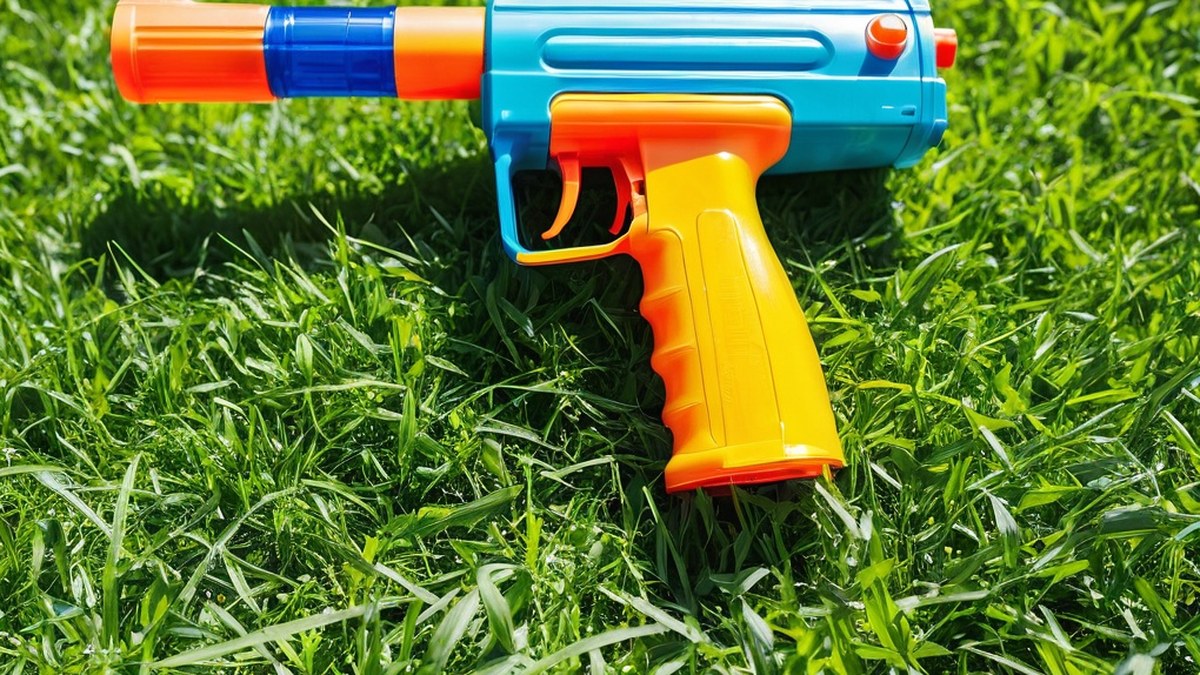
The Super Soaker brand remains a fixture of summer toy aisles today, still instantly recognizable by its bright plastic colors and pump-action design, even as the specific models have evolved well past anything a kid in the early 90s would recognize. For anyone who spent a childhood summer soaked to the bone by a sibling or friend wielding one, it’s a strange thing to learn that the whole phenomenon traces back to a NASA engineer accidentally discovering, in his own bathroom, that failed heat-pump plumbing made for an extremely effective water weapon.