Trivial Pursuit and the 80s Board Game Night Revival
Two Canadian journalists invented a trivia game to replace a missing Scrabble piece — and accidentally kicked off the biggest board game phenomenon of the decade.
Board game night has existed in some form for as long as there have been board games, but the specific 1980s version of it — adults gathered around a dining table on a Friday night, genuinely competitive, genuinely invested in a game rather than just half-watching it while doing something else — owes an enormous amount to a single title. Trivial Pursuit, invented almost by accident in 1979 by two Canadian journalists who’d discovered pieces missing from their Scrabble set and decided to make their own game instead, became the defining board game of the decade that followed.
A Game Invented Out of Frustration
The origin story is almost too tidy to be true, but it’s well documented: Chris Haney and Scott Abbott, frustrated after discovering their Scrabble set was missing pieces, spent an evening sketching out the concept for a trivia-based board game instead of simply buying a replacement set. What started as an evening’s diversion turned into a multi-year development process, refining categories, writing thousands of trivia questions, and eventually bringing in investors and a small team to turn the concept into an actual manufactured product.
A Slow Start, Then an Explosion
Trivial Pursuit’s initial 1981 release in Canada sold modestly. Its real breakthrough came with the US release a couple of years later, timed into a cultural moment that turned out to be exactly right for it: adults looking for something more engaging than existing mainstream board games, a growing appetite for games that rewarded actual knowledge rather than pure luck, and word-of-mouth momentum from dinner parties and game nights where the game proved itself genuinely, repeatedly fun rather than a one-time novelty. By 1984, it had become a certified cultural phenomenon, selling tens of millions of copies and becoming, for a stretch, the best-selling adult board game in America.
The Wedge-Shaped Scorecard
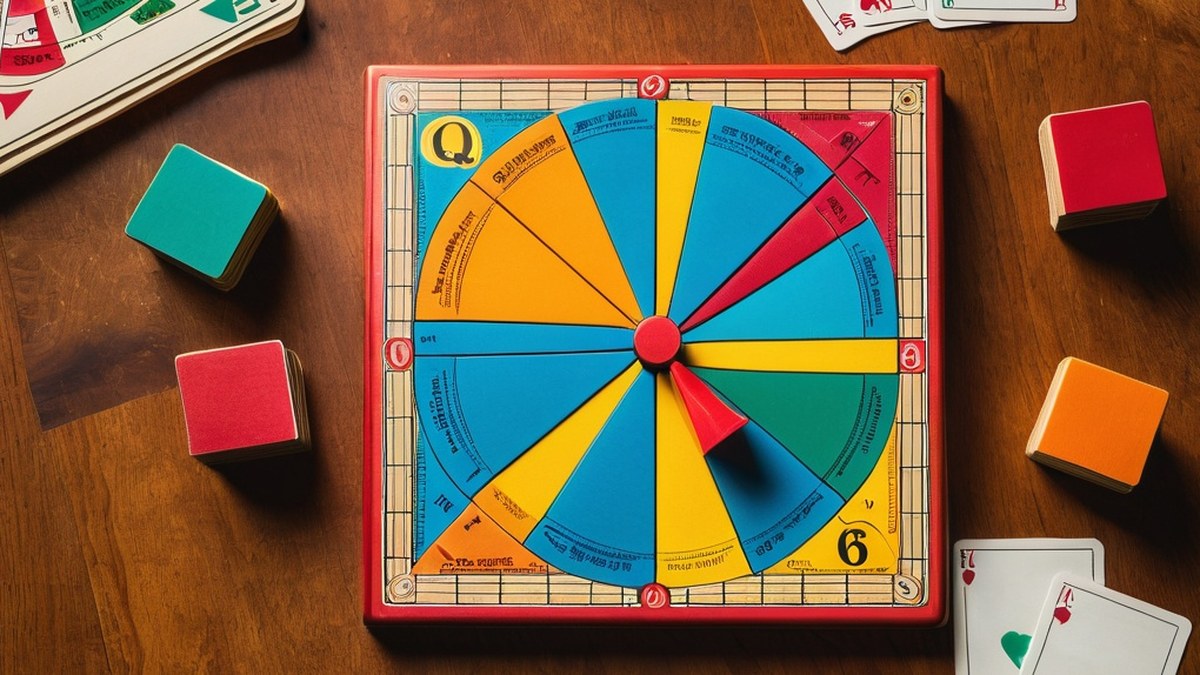
Part of what made Trivial Pursuit work as a social object, not just a trivia quiz, was its physical design: the circular scoring piece, divided into six colored wedges, that slowly filled up as players answered questions correctly in each category — geography, entertainment, history, art and literature, science and nature, sports and leisure. Watching your own wedge-piece fill in, or seeing an opponent’s stay frustratingly empty in one specific category, gave the game a visible, almost tactile sense of progress that a lot of earlier trivia and quiz games had lacked.
Everyone Had a Category They Dreaded
Part of the game’s lasting appeal was how clearly it exposed the specific, often embarrassing gaps in a player’s general knowledge. Plenty of otherwise sharp, well-read adults discovered they were hopeless at sports trivia, or history, or had somehow never retained a single fact about geography despite years of schooling, and the game’s format made those gaps visible and, usually, the subject of good-natured ribbing from whoever else was at the table. It turned “I’m surprisingly bad at this one category” into a recurring, shared joke across countless game nights.
Spin-Offs, Editions, and an Enduring Format
The original success spawned an enormous number of themed editions over the following decades — genre-specific versions covering everything from specific TV shows to music eras to regional trivia — a pattern that’s since become the standard playbook for any successful trivia-based game or quiz show franchise. The core format, a wheel of categories and a stack of question cards, proved durable enough to outlast the specific 80s board-game boom that first popularized it, and variations of it are still a fixture of game nights, pub quizzes, and party game shelves today — all tracing back to two frustrated Scrabble players who decided, one evening, to just make their own game instead.